The Drone Wars are coming...
Apr 12, 2026
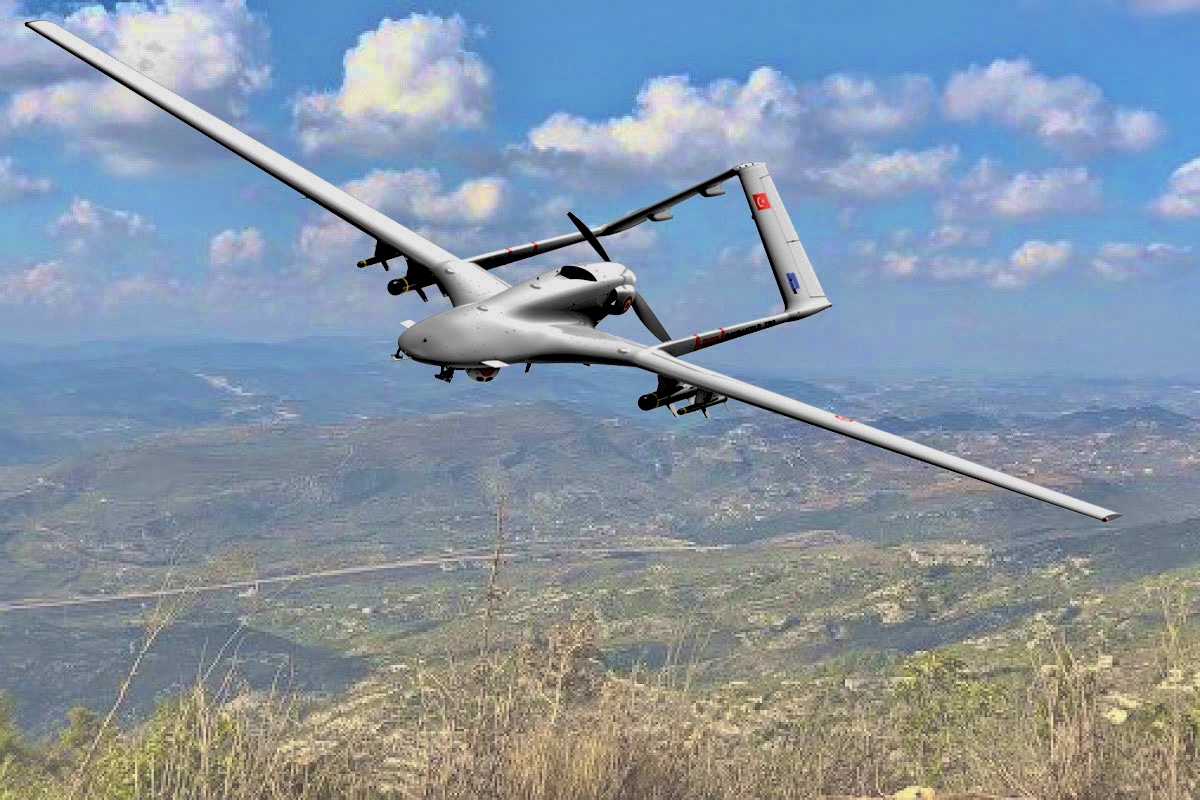
Photo: Wikimedia Commons · CC BY-SA 4.0
Actually, the drone wars are here. And this is the future of warfare.
Look up. Not at the sky you know — the one crossed by commercial jets and weather satellites — but at a new sky, layered with cheap, fast, autonomous machines that are rewriting every rule of combat written since the Second World War. This is not a metaphor and it is not a prediction. It is April 2026, and across two theaters separated by a thousand miles, the drone war is raging at industrial scale.
In Ukraine, the numbers are staggering. One drone manufacturer alone plans to produce 3 million drones this year — roughly ten times what the United States produced in all of last year. Ukrainian forces now hold a 30-percent strike drone advantage over Russia, flying an average of one mid-range strike per day against Russian air defenses, radar systems, and missile complexes. In a single overnight exchange this past week, Russia launched 128 Shahed and Italmas drones at Ukrainian cities. Ukraine downed 113 of them. That's not a defensive collapse — that's a battle rhythm. That's two militaries trading mass autonomous fire the way previous generations traded artillery shells.
Meanwhile in the Persian Gulf, a parallel and equally consequential drama is unfolding. A fragile US-Iran ceasefire announced April 7 — which was supposed to reopen the Strait of Hormuz — collapsed within hours. Saudi Arabia, the UAE, Kuwait, Qatar, and Bahrain all reported drone and missile strikes on their territory the same day the truce was announced. Iran, despite five weeks of intensive US strikes against its arsenal, still retains the capacity to launch 50 to 100 one-way attack drones per day, aimed at the energy infrastructure that powers the global economy. Oil fields, refineries, LNG facilities, ports — all of it under siege from machines that cost less than a used car.
This is the world the drone wars have made.
Ukraine is the laboratory. Everything the world will fight with and fight against for the next generation is being stress-tested, iterated, and field-proven in the mud and rubble of the Donetsk front right now. The Lancet-3. The FPV kamikaze. Electronic warfare systems that can land enemy drones intact — intelligence windfalls that would have been unthinkable a decade ago. Ukraine's Defense Forces completed more than 9,000 ground robotic missions in March 2026 alone. Ex-CIA Director David Petraeus recently stated that the United States needs to learn a "whole new concept of warfare" from what Ukraine has built under fire.
What Ukraine has built is remarkable not just for its lethality, but for its ingenuity. A country fighting for its survival, outgunned in conventional terms, has turned necessity into doctrine. Mid-range strike drones now feature enhanced navigation, resistance to Russian electronic jamming, and the ability to adjust trajectory mid-flight. A new unmanned surface vessel — announced just days ago — is specifically engineered to operate through contested electronic warfare environments. Ukraine is not adapting to drone warfare. Ukraine is inventing it.
And the world is paying attention. Ukrainian manufacturers are now in discussions to supply Gulf states with up to 1,000 interceptor drones per day to counter Iran's missile and drone campaigns. The country that has absorbed more drone fire than any nation in history has become the planet's foremost authority on how to survive it.
There is no going back to warfare before the Drone Age. The asymmetry that made drones attractive — cheap enough to lose, lethal enough to matter — has permanently lowered the threshold for offensive action. Any state, any well-funded militia, any determined non-state actor can now project destructive power at scale. The Houthis proved it against global shipping. Iran is proving it against Gulf energy infrastructure. The barrier to catastrophic disruption has never been lower.
But here is the hopeful part, and it matters: defense is learning faster than offense.
The layered air defense networks protecting Kyiv — Patriot, IRIS-T, Gepard, working in concert — represent something genuinely new: a city-scale, real-time automated interception architecture. The intercept ratios achieved against Shahed swarms would have seemed implausible five years ago. Ukraine's iterative, open-source approach to drone development has compressed the innovation cycle from years to weeks. The lessons being written in blood today are being read in defense ministries, engineering labs, and military academies around the world tomorrow.
The drone wars are not the end of something. They are the violent, accelerating beginning of something new — a warfare defined less by mass and firepower, and more by autonomy, electronic sophistication, and the cold ingenuity of whoever can iterate fastest under fire.
Ukraine has shown us both the nightmare and the model. The drones will keep coming. The question — the only one that matters now — is whether the world will be ready.